Tension Incontinence Vs Impulse Urinary Incontinence: Whats The Distinction? The prognosis of desire incontinence varies from person to person, and for this reason, treatment strategies must ideally be individualized after conversation with the patient. While behavior modification and medications have promising results in more youthful individuals, the neuromodulation choices must be thought about early in the algorithm for the older adult population. According to the American Urological Association, the efficiency of therapy standards and diagnosis of urge urinary Lazy bladder syndrome incontinence depends on many elements associated with the client's age and comorbid conditions. Frailty, practical and cognitive disability, family members and caregiver assistance, and comorbid conditions play pivotal functions in a client's involvement in behavioral therapies.
Exactly how do you know if you have tension or prompt urinary incontinence?
stress urinary incontinence & #x 2013; when pee leaks out at times when your bladder is under stress; for instance, when you cough or laugh. impulse (necessity) urinary incontinence & #x 2013; when pee leakages as you really feel an abrupt, extreme desire to pee, or soon after that.

Treatment Recommendations
Hence, third-line treatment choices such as PTNS might require to be consisted of in treatment and diagnosis discussions previously in the illness procedure for the older or affected populace. A standard mini-mental standing test score can verify crucial while analyzing the quality of life improvement. In spite of all these factors to consider, when left unattended or unattended, the prognosis of impulse urinary system incontinence is abysmal; it can be socially challenging and cause substantial morbidity. Blockage brings about a persistantly overdistended bladder, which sheds its capability to contract; after that the bladder does not empty completely, leading to overflow. Obstruction likewise might cause detrusor overactivity and urge urinary incontinence. If the detrusor muscle loses its capacity to agreement, overflow incontinence might follow. It is typically sped up by use of a diuretic and is worsened by failure to rapidly get to a bathroom. In females, atrophic vaginitis, common with aging, adds to thinning and inflammation of the urethra and seriousness. There are some notable distinctions when going over overactive bladder vs. urinary incontinence. The sudden and regular impulse to pee is present in both problems, nonetheless, the primary distinction is patients with OAB feel an overwhelming urge to urinate, however do not specifically leak urine like individuals with UI regularly do. It's very common to experience combined incontinence, indicating a mix of stress and prompt signs.- Stress and anxiety incontinence is activated by a coughing, sneeze, or exercise, and the outcome is dripping pee.It offers present info and opinions connected to females's wellness.Several older patients are institutionalized due to the fact that incontinence is a concern to caregivers.Bladder neck muscle mass in women or prostate smooth muscle in men is lax, often creating tension incontinence.Just light tasks, such as resting with light arm weights, strolling, and sluggish stair climbing.Urge incontinence often occurs due to an overactive bladder (OAB).
History
Untreated desire incontinence can lead to difficulties such as urinary system infections and impaired day-to-day performance. Despite the wide occurrence of impulse incontinence, extremely few individuals look for help. Particular inquiries for urinary system symptoms of desire and stress incontinence must be consisted of in the testimonial of systems, as lots of patients are uneasy reviewing this with the medical professional. Some treatments can be managed at home, like dietary modifications or dealing with constipation, which can contribute to nerve dysfunction that triggers urinary system frequency. Advise urinary incontinence frequently takes place due to an overactive bladder (OAB). An overactive bladder does not constantly cause leaking, but when it does it's called impulse urinary incontinence. Tension urinary follow this link incontinence results from urine leaking as a result of some physical motion that causes it, such as sneezing, coughing, laughing, running or hefty training. Detrusor myomectomy may be done to lower unwanted bladder contractions. As a last hope, an urinary system diversion can be created to draw away the urine far from the bladder. Option of procedure is based upon existence of other problems, physical restrictions, and person preference. Detrusor underactivity causes urinary retention and overflow incontinence in approximately 5% of clients with incontinence. Anticholinergics and opioids significantly reduce detrusor contractility; these medicines are common short-term reasons. The detrusor might become underactive in guys with chronic electrical outlet blockage as the detrusor is replaced by fibrosis and connective cells, protecting against the bladder from emptying also when the obstruction is removed.Types Of Urinary Incontinence
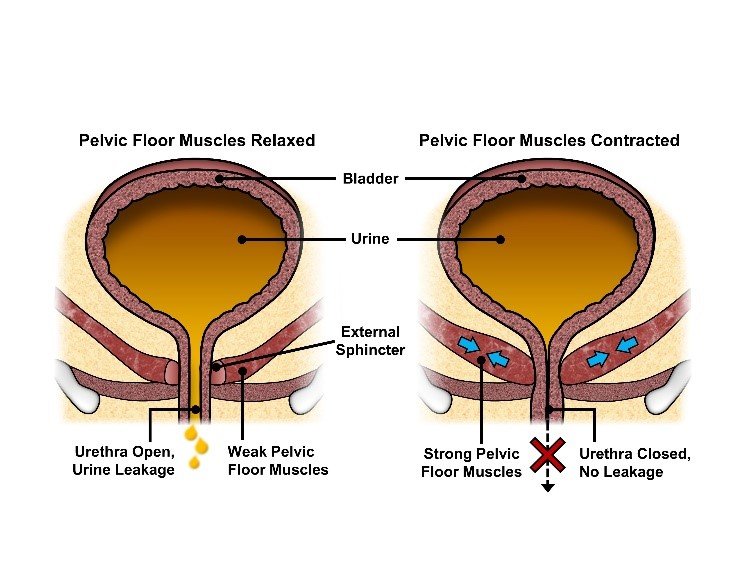
If you feel like you have to pee yet nothing (or really little) comes out, you may have an urinary system tract infection. You could feel embarrassed to discuss your urinary incontinence, however it's worth it. You put it into thevagina, where it rearranges the urethra (the tube that carries pee out of your bladder) to help prevent leakage. However, many people with OAB experience desire incontinence as a sign. An individual may likewise gain from workouts to aid enhance the pelvic flooring, such as Kegels. Physical therapy that focuses on the pelvic flooring, or a sort of therapy referred to as biofeedback, may contribute to this. Unfavorable effects consist of anticholinergic effects (eg, completely dry mouth, irregularity), which might interfere with adherence and worsen urinary incontinence. The dosage should not go beyond 4 mg once a day in clients with renal problems. Adverse results resemble those of oxybutynin but, due to bladder selectivity, may be less extreme.